The Origin
A single README that changed how devs discover tools
In 2014, developer Sindre Sorhus pushed a file to GitHub with a deceptively modest title: awesome. It was a curated list of resources — tools, frameworks, articles — organized by topic. No algorithm. No ads. Just one developer's opinionated, lovingly maintained list of things he found genuinely useful.
What happened next was a testament to how starved the community was for exactly this kind of signal. Developers forked it, spun off their own "awesome-X" lists, and contributed back. Today, the sindresorhus/awesome repository sits at over 434,000 stars — making it one of the most starred repositories in the history of GitHub — and acts as a meta-directory: a curated list of curated lists.
"There are amazing things happening in the open source community. We need people to be aware of it." — Sindre Sorhus, creator of Awesome
Explore the ecosystem
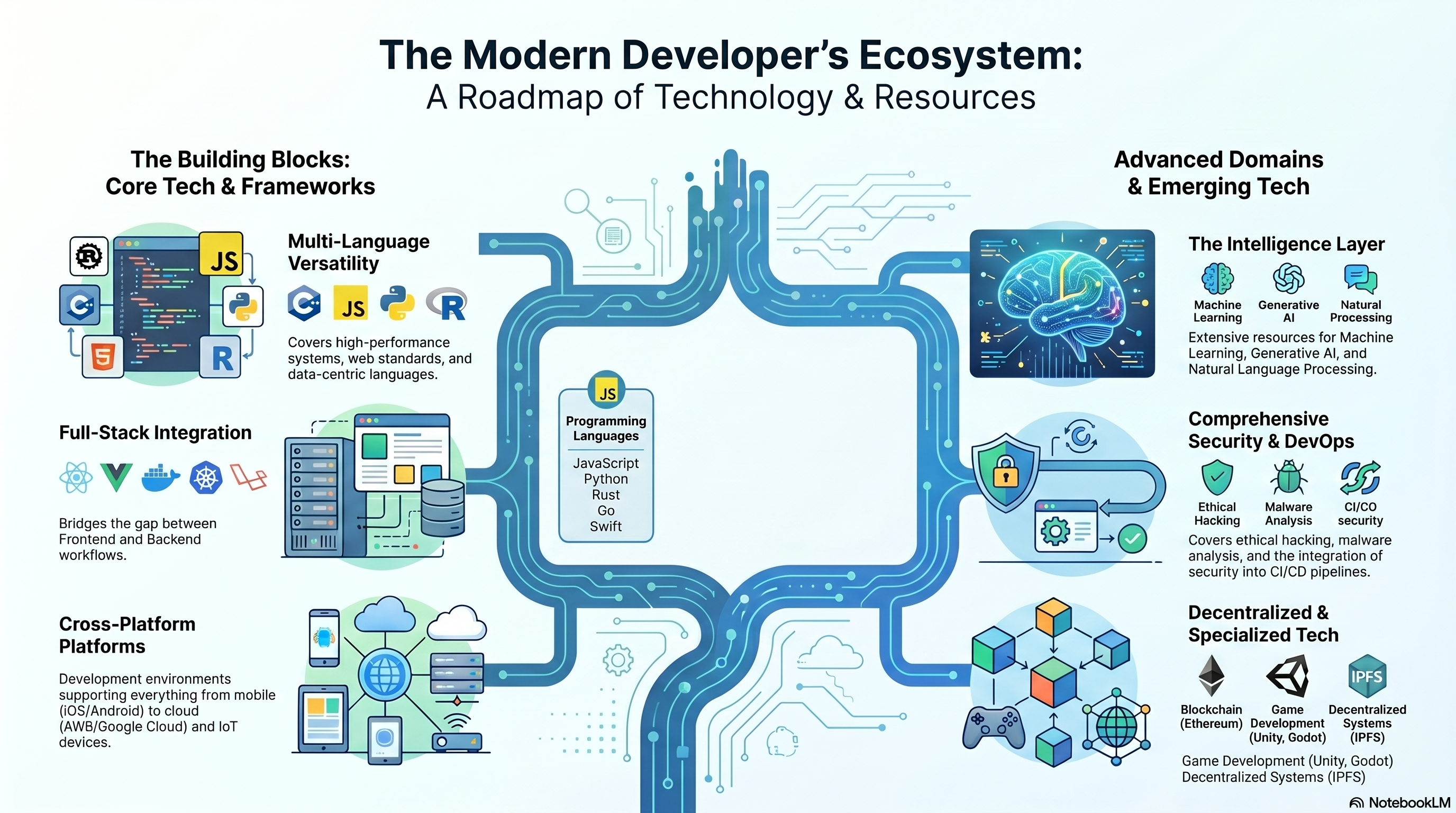
Six pillars of the modern developer's world
Click a domain to learn more about what Awesome covers in that space:
Languages & Runtimes
The foundation of everything. Awesome covers JavaScript, Python, Rust, Go, Swift, R, C++, and dozens more. Lists like awesome-python alone link to hundreds of libraries for web, data, ML, and automation — giving beginners a curated start and veterans a way to discover niche gems they'd never Google.
Why it matters
Reading GitHub is reading the future
Most developers discover new tools through Twitter, Hacker News, or word of mouth — all of which are subject to noise, hype cycles, and popularity bias. The Awesome ecosystem cuts through that. Each list is maintained by practitioners who use these tools daily, which means recommendations carry real signal.
Beyond discovery, reading these repositories teaches you something deeper: how communities self-organize. A language's most-starred repos tell you what problems developers in that community consider unsolved. The gaps in an awesome list tell you where the next wave of tooling is being built.
How to read it
Five ways to get the most from Awesome
The bigger picture
Open source isn't a movement anymore — it's the infrastructure
The modern developer ecosystem isn't a few big players — it's a dense, interconnected web spanning languages, platforms, domains, and disciplines. Open source is the connective tissue that holds it all together.
Repositories like Awesome are the maps of this territory. They don't just list tools — they reveal how communities think about their problems. The fact that "Security & DevOps" and "AI/ML" are the two fastest-growing sections isn't a coincidence; it mirrors exactly where industry investment and developer attention are flowing.
Every star on a GitHub repo is a developer saying: this matters. With 434,000 stars, Awesome is saying something remarkable — that in an age of algorithmic curation and AI-powered search, humans still trust humans to point the way.
Ready to explore?
Dive into the Awesome repository and start discovering the tools shaping modern software.
Open on GitHub ↗ Explore AI lists ↗ Web dev picks ↗